



The Meaning, Tradition, and Importance of Catholic Rosary Beads: A Guide for the Faithful

Catholic rosary beads are among the most familiar and meaningful devotional objects in the Catholic faith. Found in churches, homes, schools, hospitals, and pockets around the world, the Rosary has helped generations of Catholics slow down, meditate on the Gospel, and bring their needs before God.
At first glance, a rosary may seem like a simple strand of beads connected to a crucifix. Yet every part has a purpose. The crucifix recalls the saving sacrifice of Jesus Christ. The beads provide a structure for prayer. The mysteries guide the faithful through important events in the lives of Jesus and the Blessed Virgin Mary.
The Rosary is not merely a prayer that is repeated from memory. It is a Christ-centered meditation rooted in Scripture and supported by the intercession of Mary. Through its rhythm, the faithful reflect on Christ’s birth, ministry, suffering, death, Resurrection, and glory.
This guide explores the meaning, tradition, symbolism, history, and importance of Catholic rosary beads. It also explains how to pray the Rosary, how the mysteries are organized, why Catholics honor Mary, and how rosary beads can strengthen personal and family faith.
What Are Catholic Rosary Beads?
Catholic rosary beads are a set of prayer beads used to count the prayers of the Rosary. Their arrangement allows the person praying to move through a series of prayers without having to focus on counting.
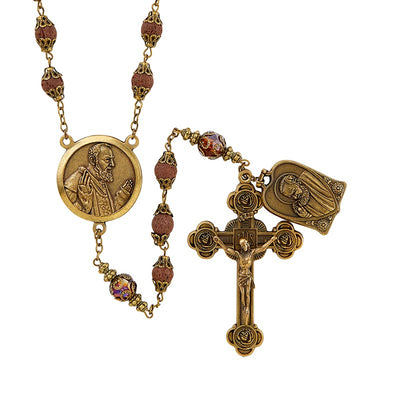
A traditional five-decade Catholic rosary usually contains:
- A crucifix
- One opening bead
- Three smaller beads
- One additional bead
- A centerpiece
- Five groups of ten beads called decades
- Single beads separating the decades
The crucifix is held while praying the Apostles’ Creed. The separate beads are used for the Our Father, while each group of ten beads is used for ten Hail Marys.
The physical rosary is a devotional aid. Catholics do not believe the beads have magical power. Their purpose is to support concentration, organize the prayer, and help the faithful meditate on the mysteries of salvation.
What Does the Word “Rosary” Mean?
The word “Rosary” is traditionally connected to the idea of a crown or garland of roses. In Catholic symbolism, each prayer may be understood as a spiritual rose offered in devotion.
The name reflects the beauty and repetition of the prayer. Just as individual flowers form a complete garland, individual prayers form a larger meditation on the life of Christ.
The word Rosary may refer to both:
- The devotional prayer itself
- The set of Catholic prayer beads used while praying it
Although the Rosary has a strong Marian character, it is ultimately centered on Jesus Christ. Mary’s role is to lead the faithful toward her Son.
The History and Tradition of the Catholic Rosary Beads
The use of beads or other counting tools in prayer is older than the modern form of the Rosary. Early Christians sometimes used stones, knotted cords, or strings of beads to count repeated prayers and Psalms.
During the Middle Ages, many religious communities prayed all 150 Psalms. Lay Catholics who could not read or did not have access to the Psalms often prayed repeated Our Fathers or Hail Marys instead. Counting beads helped them keep track.
Over time, these repeated prayers became connected to meditations on the lives of Jesus and Mary. This development gradually formed the structured Rosary known today.
Catholic tradition strongly associates St. Dominic with promoting the Rosary. However, the devotion developed across several centuries through the work of religious orders, clergy, lay communities, and Catholic families.
The Joyful, Sorrowful, and Glorious Mysteries became the traditional foundation of the Rosary. In 2002, Pope St. John Paul II introduced the Luminous Mysteries, which focus on the public ministry of Jesus.
Today, the Rosary remains one of the most widely practiced Catholic devotions in the world.
The Meaning Behind Each Part of the Rosary
The Crucifix
The crucifix reminds Catholics of the suffering, death, and saving love of Jesus Christ. The Rosary begins at the crucifix with the Sign of the Cross and the Apostles’ Creed.
Beginning at the crucifix keeps the devotion grounded in the central mystery of Christianity: Christ gave His life for the salvation of humanity.
The Opening Beads
The first bead is normally used for the Our Father. The next three beads are used for three Hail Marys, often offered for an increase in faith, hope, and charity.
These opening prayers prepare the heart and mind for meditation.
The Centerpiece
The centerpiece connects the opening div to the circular series of decades. It often features the Blessed Virgin Mary, the Miraculous Medal, the Sacred Heart, or another Catholic image.
The Decades
A decade is one Our Father followed by ten Hail Marys and a Glory Be. Each decade is connected to one mystery from the life of Jesus and Mary.
The decade allows the repeated prayers to create a steady rhythm while the mind reflects on the mystery.
The Circular Shape
The circular form may symbolize continuity, perseverance, and the enduring life of prayer. It also makes the rosary comfortable to hold and move through bead by bead.
Why the Rosary Is Centered on Jesus Christ
Some people assume that the Rosary focuses only on Mary because the Hail Mary is repeated many times. In reality, the mysteries of the Rosary focus mainly on the life and saving work of Jesus Christ.
During the Rosary, the faithful meditate on events such as:
- The Annunciation
- The birth of Jesus
- The Baptism of Jesus
- The institution of the Eucharist
- The Crucifixion
- The Resurrection
- The Ascension
Mary is present because she had a unique role in the life of Christ. She accepted God’s will, gave birth to Jesus, followed Him throughout His ministry, stood near the Cross, and remained with the early Church.
Through the Rosary, Catholics contemplate Jesus with Mary and ask her to help them grow closer to Him.
Do Catholics Worship Mary When Praying the Rosary?
Catholics do not worship Mary. Worship belongs to God alone.
Catholics honor Mary as the Mother of Jesus and ask for her intercession. This is similar to asking a trusted friend or family member to pray for a particular need.
The Hail Mary includes language rooted in the Gospel of Luke. It recalls the angel Gabriel’s greeting and Elizabeth’s words of blessing.
When Catholics ask Mary to “pray for us,” they are not replacing God. They are asking her to join them in prayer and lead them toward her Son.
The Four Sets of Rosary Mysteries
The mysteries are the heart of the Rosary. Each mystery invites meditation on an important event in the Gospel.
| Mystery Set | Spiritual Focus | Traditional Days |
|---|---|---|
| Joyful Mysteries | The Incarnation and early life of Jesus | Monday and Saturday |
| Luminous Mysteries | The public ministry of Jesus | Thursday |
| Sorrowful Mysteries | The Passion and death of Jesus | Tuesday and Friday |
| Glorious Mysteries | The Resurrection, the Holy Spirit, and eternal glory | Wednesday and Sunday |
The Joyful Mysteries
- The Annunciation
- The Visitation
- The Nativity
- The Presentation of Jesus in the Temple
- The Finding of Jesus in the Temple
The Joyful Mysteries invite reflection on humility, trust, obedience, family life, and the mystery of God becoming man.
The Luminous Mysteries
- The Baptism of Jesus in the Jordan
- The Wedding at Cana
- The Proclamation of the Kingdom of God
- The Transfiguration
- The Institution of the Eucharist
The Luminous Mysteries focus on Christ’s public ministry, teachings, miracles, and sacramental presence.
The Sorrowful Mysteries
- The Agony in the Garden
- The Scourging at the Pillar
- The Crowning with Thorns
- The Carrying of the Cross
- The Crucifixion
The Sorrowful Mysteries encourage reflection on sacrifice, suffering, mercy, forgiveness, and Christ’s love for humanity.
The Glorious Mysteries
- The Resurrection
- The Ascension
- The Descent of the Holy Spirit
- The Assumption of Mary
- The Coronation of Mary
The Glorious Mysteries celebrate Christ’s victory over death, the gift of the Holy Spirit, and the Christian hope of eternal life.
How to Pray the Catholic Rosary
The Rosary may appear difficult to beginners, but its pattern becomes familiar with regular practice.
- Make the Sign of the Cross.
- Hold the crucifix and pray the Apostles’ Creed.
- On the first bead, pray the Our Father.
- On the next three beads, pray three Hail Marys.
- Pray the Glory Be.
- Announce the first mystery.
- On the separate bead, pray the Our Father.
- On the next ten beads, pray ten Hail Marys while meditating on the mystery.
- Pray the Glory Be and, when desired, the Fatima Prayer.
- Repeat the same pattern for the remaining four mysteries.
- After the fifth decade, pray the Hail Holy Queen.
- Conclude with the Sign of the Cross.
Personal intentions may be offered before beginning or assigned to individual decades. Catholics often pray for family members, healing, peace, vocations, the deceased, or other spiritual needs.
The Main Prayers Used in the Rosary
The Apostles’ Creed
The Apostles’ Creed summarizes core Christian beliefs about God the Father, Jesus Christ, the Holy Spirit, the Church, forgiveness, resurrection, and eternal life.
The Our Father
The Our Father was taught by Jesus to His disciples. It expresses trust in God, dependence on His providence, the need for forgiveness, and a desire to follow His will.
The Hail Mary
The Hail Mary honors God’s work in Mary’s life and asks for her prayer. Its opening words are based on Scripture.
The Glory Be
The Glory Be praises the Holy Trinity: Father, Son, and Holy Spirit.
The Fatima Prayer
The Fatima Prayer asks Jesus for mercy, forgiveness, and the salvation of souls. It is commonly prayed after each decade.
The Hail Holy Queen
The Hail Holy Queen is normally prayed after the five decades. It expresses trust, hope, and a request for Mary’s intercession.
Why Catholic Rosary Beads Are Important
They help Catholics meditate on Scripture
Each mystery is connected to an event in the life of Christ or the early Church. The Rosary encourages Catholics to return repeatedly to the Gospel.
They provide structure during prayer
Some people struggle to know how to begin praying. Rosary beads offer a clear sequence that can be followed during joyful, ordinary, or difficult moments.
They reduce the need to count
Moving from bead to bead allows the person to focus more fully on the words and mysteries rather than keeping track mentally.
They support consistency
A visible rosary can serve as a reminder to pray. Keeping one beside the bed, in a Bible, or in a pocket can help make prayer part of everyday life.
They connect generations
Rosaries are often passed from parents and grandparents to children. A family rosary may carry memories of shared prayer, sacraments, and loved ones.
They offer comfort during hardship
When grief, illness, anxiety, or uncertainty makes it difficult to find words, the familiar structure of the Rosary can help a person continue praying.
Spiritual Benefits of Praying the Rosary
The Rosary does not remove every difficulty or guarantee a particular outcome. Its spiritual value comes from the way it helps the faithful remain close to Christ.
Regular Rosary prayer may help a person:
- Develop a more consistent prayer habit
- Grow in knowledge of the Gospel
- Become more patient and reflective
- Pray faithfully for others
- Find peace during stressful periods
- Grow in humility and gratitude
- Reflect on suffering with hope
- Strengthen devotion to Jesus Christ
- Deepen family prayer traditions
- Remain connected to the wider Catholic Church
The Rosary is most meaningful when it is prayed attentively rather than hurriedly. Even when distractions occur, the faithful can gently return their focus to the mystery.
Why Repetition in the Rosary Is Meaningful
Some people question why the same prayers are repeated. Repetition can become empty when words are spoken without attention, but repetition itself is not meaningless.
People often repeat words of gratitude, love, praise, and commitment because repeated words can deepen reflection and strengthen memory.
In the Rosary, the repeated Hail Marys create a steady rhythm. This rhythm allows the mind to meditate on the announced mystery.
The goal is not to rush through the beads. The goal is to allow the words and mysteries to lead the heart into prayer.
Different Types of Catholic Rosary Beads
| Rosary Type | Features and Common Uses |
|---|---|
| Traditional Five-Decade Rosary | The standard form used to pray the full set of mysteries |
| Wooden Rosary | Lightweight, simple, and suitable for daily prayer |
| Glass or Crystal Rosary | Decorative beads often selected for sacramental gifts |
| Metal Rosary | Durable links and beads designed for frequent handling |
| Gemstone Rosary | Made with natural or decorative stones |
| Knotted Cord Rosary | Lightweight and durable for travel or everyday carrying |
| One-Decade Rosary | A compact option for pockets, vehicles, or short prayer periods |
| Mission Rosary | Colored beads represent different regions of the world |
| First Communion Rosary | A special keepsake for children receiving the Eucharist |
| Wedding Rosary | A meaningful gift for Catholic weddings and anniversaries |
How to Choose the Right Catholic Rosary
Consider how often it will be used
A rosary intended for daily use should be durable and comfortable. A decorative rosary may be more suitable for display or special occasions.
Choose a comfortable bead size
Larger beads may be easier for children, older adults, or people with limited hand mobility. Smaller beads are easier to carry.
Check the construction
Look for secure links, a strong cord, smooth beads, and firmly attached religious components.
Select meaningful colors or materials
Some Catholics choose rosaries based on a favorite color, saint, Marian devotion, birthstone, sacramental occasion, or family tradition.
Consider the crucifix and centerpiece
The religious images should be reverent, recognizable, and suitable for Catholic devotion.
Think about the recipient
When buying a rosary as a gift, consider the recipient’s age, prayer habits, favorite saint, and the occasion being celebrated.
Catholic Rosary Beads as Religious Gifts
Rosary beads are meaningful Catholic gifts because they are intended to be used in prayer. They may become lifelong keepsakes connected to important spiritual moments.
Rosaries are commonly given for:
- Baptism
- First Communion
- Confirmation
- RCIA and reception into the Church
- Graduation
- Marriage
- Ordination
- Religious profession
- Christmas
- Easter
- Mother’s Day
- Father’s Day
- Healing and encouragement
- Memorial remembrance
A rosary may be paired with a rosary case, Catholic Bible, prayer card, crucifix, saint medal, or devotional book.
Adding a handwritten note or prayer intention can make the gift even more meaningful.
Teaching Children to Pray the Rosary
A full Rosary may be difficult for young children at first. Families can introduce the devotion gradually.
- Begin with one decade.
- Use larger, child-friendly beads.
- Show an image connected to the mystery.
- Explain the Gospel story in simple language.
- Allow the child to lead one prayer.
- Offer a clear family intention.
- Keep the experience calm and encouraging.
- Increase the length as the child becomes comfortable.
Children do not need to understand every detail immediately. Regular family prayer helps them become familiar with the words and meaning over time.
Praying the Rosary as a Family
Family Rosary prayer creates a regular opportunity to pause, gather, and place shared needs before God.
Families may pray the Rosary:
- Before bedtime
- On Sundays
- During Advent or Lent
- Before a family member travels
- During illness or uncertainty
- For deceased relatives
- On Marian feast days
- While preparing for a sacrament
Different family members can lead different parts. One person may announce the mystery, another may lead the Our Father, and the group may alternate the Hail Marys.
Family prayer does not need to be perfect. Distractions are normal, especially with young children. Faithfulness and sincerity matter more than flawless concentration.
Using the Rosary During Difficult Times
Catholics often turn to the Rosary during grief, illness, fear, financial stress, or uncertainty.
The familiar prayers can provide structure when it is difficult to form personal words. Holding the beads may also offer a physical reminder to remain present and prayerful.
The Sorrowful Mysteries may be especially meaningful during suffering. The Glorious Mysteries can offer hope during bereavement. The Joyful Mysteries may support prayers for family life and new beginnings.
The Rosary does not guarantee that every problem will be solved in the way expected. It helps the faithful place their concerns before God and continue forward with trust.
Can Catholic Rosary Beads Be Blessed?
Yes. A priest or deacon may bless Catholic rosary beads.
A blessing does not make the rosary magical. It dedicates the object for religious use and asks God’s grace upon the person who prays with it.
A rosary does not need to be blessed before it can be used. It may be prayed with immediately and blessed later.
Once blessed, the rosary should be treated respectfully as a Catholic devotional object.
How to Care for Catholic Rosary Beads
- Store the rosary in a pouch, box, or prayer area.
- Avoid pulling tightly on the chain, links, or cord.
- Keep delicate beads away from moisture and harsh chemicals.
- Clean the rosary gently with a soft cloth.
- Check links regularly when carrying it every day.
- Repair damaged parts when possible.
- Keep small beads away from young children when they may present a choking hazard.
A rosary worn through frequent prayer can become deeply meaningful. Signs of use do not reduce its spiritual value.
Common Misunderstandings About the Rosary
The Rosary is worship of Mary
Catholics worship God alone. The Rosary honors Mary and asks for her intercession while meditating on the life of Christ.
Rosary beads are magical objects
Rosary beads are prayer tools. They do not operate as charms or guarantee particular outcomes.
The Rosary is not connected to Scripture
The mysteries are drawn from the life of Jesus and the early Church. Several prayers also contain language based directly on Scripture.
Only lifelong Catholics can pray the Rosary
Anyone can learn. Beginners may use a printed guide, pray one decade at a time, or follow an audio prayer.
A distracted Rosary does not count
Distractions are normal. The faithful can gently return their attention to the prayers and mysteries without becoming discouraged.
Find Catholic Rosary Beads for Prayer and Special Occasions
Explore thoughtfully selected Catholic rosary beads for personal devotion, family prayer, sacramental celebrations, parish use, and meaningful religious gifts.
Choose from traditional rosaries, wooden rosaries, glass and crystal designs, gemstone beads, First Communion rosaries, Marian styles, and durable options for daily prayer.
Whether you are learning how to pray the Rosary, replacing a well-used devotional, or selecting a special keepsake for someone you love, the right rosary can become a lasting companion in faith.
Frequently Asked Questions About Catholic Rosary Beads
What is the meaning of Catholic rosary beads?
Catholic rosary beads help the faithful count prayers while meditating on important events in the life of Jesus Christ and the Blessed Virgin Mary.
Why are rosary beads important to Catholics?
They provide structure, support meditation, reduce distraction, and help Catholics develop a consistent prayer life centered on Christ.
How many beads are on a traditional Catholic rosary?
A traditional five-decade rosary commonly has 59 beads: 53 used for Hail Marys and six used for Our Fathers.
Do Catholics worship Mary when praying the Rosary?
No. Catholics worship God alone. They honor Mary as the Mother of Jesus and ask her to pray for them.
What are the four sets of Rosary mysteries?
The four sets are the Joyful, Luminous, Sorrowful, and Glorious Mysteries. Each set includes five events for meditation.
How long does it take to pray the Rosary?
A five-decade Rosary often takes between 15 and 25 minutes, depending on the pace and amount of reflection.
Can I pray only one decade of the Rosary?
Yes. One decade can be a meaningful prayer when time is limited or when someone is first learning the devotion.
Does a rosary need to be blessed?
No. A rosary may be used before it is blessed. A priest or deacon can bless it later.
What kind of rosary is best for everyday use?
A durable cord, wooden, or securely linked metal rosary is often practical for daily use.
Are Catholic rosary beads appropriate as gifts?
Yes. Rosaries are meaningful gifts for Baptism, First Communion, Confirmation, weddings, ordinations, Christmas, Easter, and other religious occasions.
Can non-Catholics pray the Rosary?
Yes. Anyone interested in Christian meditation and the life of Jesus may learn and pray the Rosary.
What should I do if my rosary breaks?
Repair it when possible. If it has been blessed and cannot be repaired, ask your parish for guidance on respectful disposal.
Conclusion: A Lasting Tradition of Faith and Prayer
Catholic rosary beads are simple in appearance but rich in spiritual meaning. They help the faithful move through a structured prayer while meditating on the Gospel and placing personal intentions before God.
The Rosary brings together Scripture, meditation, repetition, intercession, and devotion. It can be prayed quietly by one person, shared among family members, or offered by an entire parish community.
For beginners, the Rosary provides a dependable path into prayer. For lifelong Catholics, it can remain a steady companion through celebrations, difficult seasons, major decisions, and ordinary daily life.
Whether made from wood, glass, metal, cord, or gemstone, the deepest importance of Catholic rosary beads lies in how they are used. Each bead invites the faithful to slow down, remember Christ, and continue growing in faith.
Passed from one generation to the next, the Rosary remains a lasting Catholic tradition that connects personal prayer with the wider life of the Church.
Related Posts


