


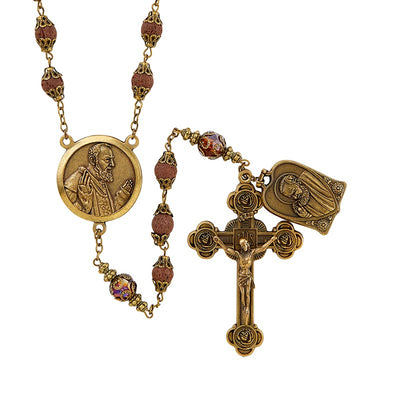

What Are the Mysteries of the Holy Rosary? A Complete Prayer Guide

The Mysteries of the Holy Rosary lead Catholics through the life, ministry, Passion and glory of Jesus Christ in prayerful companionship with Mary. Each mystery recalls a particular event from salvation history and gives us something to contemplate while praying the familiar words of the Rosary.
This complete guide explains all four sets, the traditional daily schedule, how to pray five decades and how a laminated prayer card can help beginners, families, parish groups and experienced Catholics pray with greater confidence.
What Are the Mysteries of the Holy Rosary?
The mysteries are 20 sacred events on which Catholics meditate while praying the Rosary. They are called “mysteries” not because they are puzzles to solve, but because they reveal truths about Christ that believers can continue to contemplate throughout life.
During each decade, the person praying announces one mystery, may read a short Scripture passage, prays one Our Father, ten Hail Marys and one Glory Be, and reflects on the event. The repeated prayers create a steady rhythm that supports meditation rather than distracting from it.
Taken together, the four sets form a prayerful journey:
- The Joyful Mysteries contemplate the Incarnation and childhood of Jesus.
- The Luminous Mysteries contemplate Christ's public ministry.
- The Sorrowful Mysteries contemplate his Passion and death.
- The Glorious Mysteries contemplate the Resurrection and the glory of Christ and Mary.
The purpose of the Rosary is not simply to finish a sequence of prayers. It is to spend time with Christ by prayerfully contemplating the Gospel.
The Four Sets of Mysteries of the Rosary
1. The Joyful Mysteries
The Joyful Mysteries focus on the coming of Christ into the world and the early years of his earthly life. They invite us to consider Mary's faith, Joseph's quiet service, the humility of Bethlehem and the hidden life of the Holy Family.
- The Annunciation: The Angel Gabriel announces that Mary will conceive Jesus by the Holy Spirit. This mystery invites trust, humility and openness to God's will.
- The Visitation: Mary visits her relative Elizabeth. It encourages generous service and reminds us to bring Christ to others.
- The Nativity: Jesus is born in Bethlehem. We contemplate God's humility and receive an invitation to spiritual poverty and simplicity.
- The Presentation in the Temple: Mary and Joseph present Jesus according to the Law. This mystery calls us toward obedience, dedication and reverence.
- The Finding of Jesus in the Temple: After searching for him, Mary and Joseph find the young Jesus among the teachers. We pray for perseverance in seeking Christ.
The Joyful Mysteries are traditionally prayed on Mondays and Saturdays. They are also especially fitting during Advent and Christmas because they center on the Incarnation and Christ's childhood.
2. The Luminous Mysteries
Saint John Paul II proposed the Luminous Mysteries, also called the Mysteries of Light, in 2002. They fill the space between Christ's hidden childhood and his Passion by drawing attention to five important moments in his public ministry.
- The Baptism of Jesus in the Jordan: The Father reveals Jesus as his beloved Son and the Holy Spirit descends. We reflect on our own Baptism and identity in Christ.
- The Wedding Feast at Cana: At Mary's request, Jesus performs his first public sign. The mystery encourages faith in Christ and attentiveness to Mary's counsel: follow him.
- The Proclamation of the Kingdom of God: Jesus announces the Kingdom, calls people to conversion and offers mercy. We ask for deeper repentance and fidelity to the Gospel.
- The Transfiguration: Christ's glory is revealed before Peter, James and John. We pray for the grace to listen to Jesus and remain faithful through difficulty.
- The Institution of the Eucharist: At the Last Supper, Jesus gives his Body and Blood under the signs of bread and wine. We contemplate his self-giving love and the gift of the Eucharist.
The Luminous Mysteries are traditionally prayed on Thursdays. They are particularly helpful for reflecting on discipleship, conversion and the sacramental life of the Church.
3. The Sorrowful Mysteries
The Sorrowful Mysteries lead us through the Passion of Christ. They do not invite despair; they reveal the depth of Jesus' love, the seriousness of sin and the hope made possible through his sacrifice.
- The Agony in the Garden: Jesus prays in Gethsemane and accepts the Father's will. We ask for courage, obedience and strength in times of fear.
- The Scourging at the Pillar: Jesus endures physical suffering. This mystery calls us to compassion, purity and repentance.
- The Crowning with Thorns: Jesus is mocked and crowned with thorns. We meditate on humility and pray against pride and cruelty.
- The Carrying of the Cross: Jesus carries the Cross toward Calvary. We ask for patience in carrying our own crosses and compassion for those who suffer.
- The Crucifixion and Death of Jesus: Christ gives his life for the salvation of the world. We contemplate sacrificial love, forgiveness and the mercy of God.
The Sorrowful Mysteries are traditionally prayed on Tuesdays and Fridays. They are especially appropriate during Lent, on Good Friday, during illness and whenever someone wishes to unite personal suffering with Christ.
4. The Glorious Mysteries
The Glorious Mysteries proclaim that suffering and death do not have the final word. They focus on the Resurrection, the life of the Church and the hope of eternal glory.
- The Resurrection: Jesus rises from the dead. We pray for living faith and renewed hope.
- The Ascension: Christ returns to the Father and sends his disciples on mission. We ask for hope and a desire for heaven.
- The Descent of the Holy Spirit: The Holy Spirit comes upon Mary and the Apostles at Pentecost. We pray for wisdom, courage and openness to the Spirit's gifts.
- The Assumption of Mary: Mary is taken body and soul into heavenly glory. We contemplate the dignity of the human person and the promise of resurrection.
- The Coronation of Mary: Mary is honored as Queen of Heaven and Earth. We entrust ourselves to her intercession and seek perseverance in faith.
The Glorious Mysteries are traditionally prayed on Wednesdays and Sundays. They are especially fitting during the Easter season and at times when encouragement and hope are needed.
Keep All Four Mysteries Close at Hand
Use a compact laminated guide to remember the Rosary mysteries and support your daily prayer.
Shop the Mysteries of the Holy Rosary Prayer CardWhich Mysteries of the Rosary Are Prayed on Each Day?
The Church's traditional weekly pattern assigns a set of mysteries to each day. This schedule helps Catholics move through the whole life of Christ during the week, but it is a devotional custom rather than an unbreakable rule. A family, parish group or individual may choose another set to match a liturgical celebration, a particular intention or a season of life.
| Day | Traditional mysteries | Main focus |
|---|---|---|
| Monday | Joyful Mysteries | The Incarnation and childhood of Jesus |
| Tuesday | Sorrowful Mysteries | The Passion and death of Christ |
| Wednesday | Glorious Mysteries | The Resurrection and heavenly glory |
| Thursday | Luminous Mysteries | The public ministry of Jesus |
| Friday | Sorrowful Mysteries | The Passion and death of Christ |
| Saturday | Joyful Mysteries | The Incarnation and childhood of Jesus |
| Sunday | Glorious Mysteries | The Resurrection and heavenly glory |
An older seasonal custom assigns the Joyful Mysteries to Sundays during Advent and the Sorrowful Mysteries to Sundays during Lent, while the Glorious Mysteries are used on other Sundays. Either approach can help connect the Rosary with the liturgical year.
How to Pray the Rosary Step by Step
You can pray the Rosary privately, with family, in a parish group or while traveling. A standard five-decade Rosary generally follows this sequence:
- Make the Sign of the Cross.
- Holding the crucifix, pray the Apostles' Creed.
- On the first large bead, pray the Our Father.
- On the next three smaller beads, pray three Hail Marys, traditionally for an increase in faith, hope and charity.
- Pray the Glory Be.
- Announce the first mystery for the day. You may add a short Scripture reading or intention.
- On the large bead, pray the Our Father.
- On the ten smaller beads, pray ten Hail Marys while meditating on the mystery.
- At the end of the decade, pray the Glory Be. Some people also add the Fatima Prayer.
- Repeat the pattern for the remaining four mysteries.
- After five decades, pray the Hail Holy Queen and the concluding Rosary prayer.
- Finish with the Sign of the Cross.
If you are just beginning, do not worry about speed or perfect recall. Keep a prayer card nearby, move one bead at a time and gently return your attention to the mystery whenever your mind wanders.
How to Meditate on the Rosary Mysteries
Vocal prayer and meditation work together in the Rosary. The words remain consistent while the mind and heart dwell on the announced event. The following practices can make this easier.
Read a Short Scripture Passage
Before each decade, read one or two verses connected to the mystery. Scripture gives your imagination a clear starting point and keeps the meditation centered on Christ.
Picture the Gospel Scene
Imagine the place, the people and the action without becoming concerned about creating a perfect mental image. Notice what Jesus says or does, how Mary responds and what the event reveals about God.
Connect the Mystery to Your Life
Ask where you need the grace reflected in the mystery. The Annunciation may lead you to pray for trust; the Carrying of the Cross may help you offer a burden; Pentecost may inspire a prayer for wisdom.
Offer Each Decade for an Intention
You may dedicate the five decades to family members, the Church, peace, the sick, departed loved ones or personal needs. Intentions give your prayer focus while allowing the mysteries to shape how you bring those needs to God.
Slow Down When Needed
A hurried Rosary is not a failed Rosary, and distraction does not erase sincere prayer. When possible, speak at a steady pace and pause briefly after announcing each mystery. On a busy day, one thoughtfully prayed decade may help you return later for the rest.
Why Are Rosary Prayer Cards Helpful?
Mysteries of the Holy Rosary Prayer Cards make the devotion more approachable by placing essential information in a compact format. They are useful for beginners learning the structure and for regular Rosary devotees who want a convenient reminder.
They Reduce the Need to Memorize Everything
Twenty mysteries and a changing daily schedule can feel overwhelming at first. A prayer card keeps the order visible so you can focus on prayer instead of worrying about what comes next.
They Are Easy to Carry
A small laminated card can fit inside a Bible, missal, prayer book, purse, wallet, rosary case or travel bag. It can be used at home, in church, at Eucharistic Adoration, during a commute or beside someone who is ill.
They Support Group Prayer
Prayer cards help participants follow the same sequence during parish gatherings, religious education, family prayer and ministry visits. They are particularly useful when welcoming people who are unfamiliar with the Rosary.
Lamination Improves Durability
Frequent handling can bend or soil ordinary paper. Lamination helps protect a card kept with rosary beads or carried daily. It also makes the card easier to wipe clean, though it should still be stored carefully.
They Make Meaningful Catholic Gifts
A Rosary prayer card can accompany a rosary, Catholic Bible or sacramental gift. It is suitable for First Communion, Confirmation, RCIA, Mother's Day, parish welcome packets, retreats, bereavement ministry and everyday encouragement.
How to Choose and Use a Mysteries of the Holy Rosary Prayer Card
Before ordering, review the current product images and description. A useful card should have readable print, a logical layout and the information you need most.
| What to check | Why it matters |
|---|---|
| All four sets of mysteries | A complete guide should identify the Joyful, Luminous, Sorrowful and Glorious Mysteries. |
| Front-and-back content | Product photos help you understand how the mysteries, instructions, prayers or artwork are arranged. |
| Print size and readability | Compact cards vary; make sure the text is comfortable for the intended recipient. |
| Card dimensions | Check whether it will fit in a wallet, prayer book, rosary pouch or parish packet. |
| Lamination quality | A sealed surface supports frequent handling and longer use. |
| Quantity and current price | Confirm whether the listing is for a single card or another quantity before ordering for a group. |
For Personal Prayer
Keep the card with your rosary and use it to identify the day's mysteries. Marking or writing directly on laminated cards may not work well, so place a separate intention list or Scripture note beside it.
For Families and Children
Let a child announce one mystery from the card while another leads the decade. Begin with one decade and gradually work toward five. The visible sequence helps children participate without feeling tested.
For Parishes and Ministries
Use cards in religious education classrooms, RCIA or OCIA formation, prayer groups, retreat packets, nursing-home visits and parish resource tables. Before ordering a larger quantity, verify current availability and whether the listing offers the quantity required.
A Simple Guide for Daily Rosary Prayer
Keep the mysteries organized and accessible with a durable laminated Catholic prayer card.
View the Mysteries of the Holy Rosary Prayer CardWays to Build a Consistent Rosary Habit
- Choose a regular time. Try morning, a lunch break, after dinner or before bed.
- Keep your rosary and card visible. Place them where you naturally pause for prayer.
- Begin with one decade. Consistency is more important than starting with a demanding routine.
- Pray with another person. A spouse, child, friend or prayer group can provide encouragement.
- Use the daily mystery schedule. A regular rhythm removes the need to choose a set each time.
- Connect prayer with the liturgical year. Give special attention to the Joyful Mysteries in Advent, Sorrowful Mysteries in Lent and Glorious Mysteries in Easter.
- Return gently after interruptions. Missing a day is not a reason to stop; simply begin again.
Frequently Asked Questions
What are the four sets of mysteries of the Rosary?
The four sets are the Joyful Mysteries, Luminous Mysteries, Sorrowful Mysteries and Glorious Mysteries. Each contains five events from the lives of Jesus and Mary, creating a total of 20 mysteries.
Which mysteries of the Rosary are prayed on each day?
The traditional schedule is Joyful on Monday and Saturday, Sorrowful on Tuesday and Friday, Glorious on Wednesday and Sunday, and Luminous on Thursday. Some Catholics use a seasonal Sunday pattern, and the schedule may be adapted for liturgical celebrations or pastoral needs.
Why are Rosary prayer cards helpful?
Rosary prayer cards provide a compact reference for the mysteries, their order and often the basic prayer sequence. They help beginners learn, support group participation and make it easier to pray while traveling or away from a full prayer book.
What is included on a Mysteries of the Holy Rosary prayer card?
A Mysteries of the Holy Rosary prayer card generally identifies the Joyful, Luminous, Sorrowful and Glorious Mysteries. Depending on the design, it may also include sacred artwork, the daily schedule, prayer instructions or selected Rosary prayers. Review the current product images and description to confirm the exact front-and-back content.
How many mysteries are in the Rosary?
There are 20 mysteries in the full cycle: five Joyful, five Luminous, five Sorrowful and five Glorious. A traditional five-decade Rosary normally meditates on one complete set at a time.
Can I pray a different set of mysteries than the one assigned to the day?
Yes. The weekly schedule is a helpful tradition, not a restriction. You may select mysteries that correspond to a feast, liturgical season, personal intention or community need.
How long does it take to pray five decades of the Rosary?
The time varies with pace, Scripture readings and periods of silence. Many people complete five decades in approximately 15 to 25 minutes, but prayer should not be treated as a race.
Can beginners pray only one decade?
Yes. One decade includes one mystery, one Our Father, ten Hail Marys and one Glory Be. Beginning with a decade can help children, families and new Catholics develop a sustainable prayer habit.
Final Thoughts
The Mysteries of the Holy Rosary present the Gospel as a prayerful journey—from the Annunciation and birth of Jesus through his public ministry, Passion, Resurrection and heavenly glory. The familiar repetition of the prayers gives the heart room to contemplate Christ and to seek the grace each mystery reveals.
Whether you are learning for the first time or returning to a cherished devotion, Mysteries of the Holy Rosary Prayer Cards can keep the complete sequence close at hand. Pair a card with your rosary, follow the daily schedule and begin at a pace that supports sincere, attentive prayer.
Looking for a compact prayer companion? Shop the Mysteries of the Holy Rosary Kilgarlin Laminated Prayer Card.
Product price, availability, specifications and printed content may change. Review the current product listing before ordering.
Related Posts


